
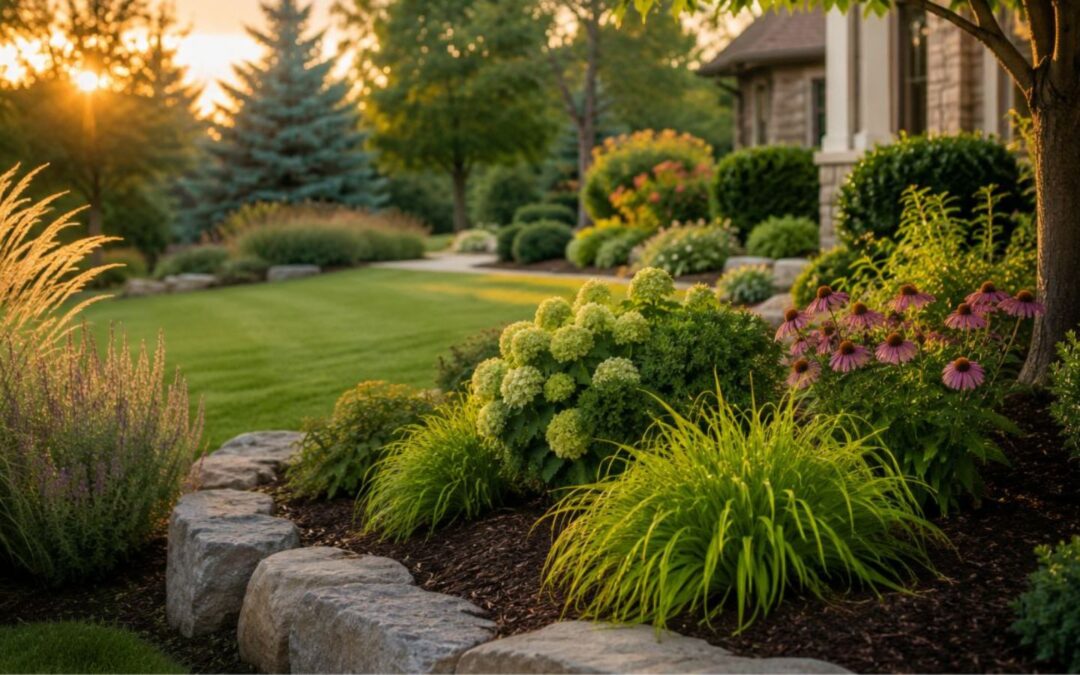
Late summer is when many Omaha landscapes begin showing signs of stress. Plants that looked healthy earlier in the season may struggle due to heat, changing moisture levels, or crowded growing conditions.
The best Omaha landscaping tips before fall focus on improving plant health before cooler weather arrives. Proper watering, strategic mulching, and thoughtful plant selection can help landscapes recover and maintain seasonal color into autumn.
Identify the Cause of Plant Stress
A common challenge in Omaha landscapes is identifying what causes plant stress. Homeowners often notice yellowing leaves, wilted foliage, or fewer flowers and assume the plant needs to be replaced.
However, the visible problem is not always the actual cause. In established landscapes, plants may outgrow their original space and begin competing for water and nutrients.
Before replacing a struggling plant, evaluate:
- Soil moisture
- Drainage
- Sun exposure
- Competition from nearby plants
Looking at the surrounding conditions first can reveal whether the issue is the plant itself or the environment affecting its growth.
Improve Watering Practices
A common question homeowners have is why plants continue to struggle even with regular watering. Often, the issue is not how often water is applied, but whether it reaches where plants need it most.
Short, frequent watering may keep the soil surface damp while leaving deeper areas too dry. This can be especially noticeable near patios, sidewalks, and driveways, where surrounding surfaces increase heat and moisture loss.
Homeowners should consider:
- Whether water is reaching the growing area
- Whether different areas need different schedules
- Whether larger plants are competing for moisture
- Whether the soil is absorbing water properly
Deep, consistent watering helps plants better handle late-summer stress and seasonal changes.
Use Mulch to Protect Soil
Mulch helps protect landscapes by reducing moisture loss, regulating soil temperatures, and limiting weed competition. However, improper application can create problems.
One common issue in established beds is adding new mulch over existing layers year after year. Excessive buildup can affect how water moves through the soil and impact plant health.
Proper mulch placement matters. It should protect the soil without being piled against trunks, stems, or crowns.
Small adjustments like these can improve how landscapes handle heat and changing conditions.
Evaluate Plant Placement
Many landscape issues develop over time as plants mature. A garden bed that looked balanced when installed may become crowded after several growing seasons.
One misconception homeowners often have is that adding more plants always creates a fuller landscape. In reality, overcrowding can increase competition for water, nutrients, and airflow.
When reviewing planting areas, consider:
- Mature plant size
- Sunlight patterns
- Spacing between plants
- Nearby structures that affect heat and moisture
In Omaha landscapes, small location differences matter. A plant near a south-facing wall may experience different conditions than the same variety in an open garden area.
Select Plants That Provide Interest in Fall
A landscape should not be judged only by its spring appearance. Many beds lose color and structure once early-season blooms fade.
Choosing hardy perennials and shrubs with late-season interest helps maintain a balanced landscape as summer growth slows.
A common mistake is selecting plants based only on their appearance at the garden center. Long-term performance depends on choosing varieties that match the property’s conditions.
For Omaha landscapes, consider:
- Seasonal color
- Cold tolerance
- Sunlight conditions
- Water requirements
- Mature growth patterns
The right plant combination creates interest beyond peak bloom periods.
How Vista Verde Evaluates Stressed Landscapes
At Vista Verde Landscaping, evaluating a stressed landscape starts with understanding the conditions affecting the plants.
A struggling plant is rarely caused by one issue alone. Sunlight exposure, drainage, plant maturity, and watering practices all influence landscape performance.
By looking at these factors together, the team can identify practical adjustments, whether that means improving maintenance practices, changing plant selections, or addressing areas where the landscape no longer fits the property conditions.
Common Landscape Problems
| Common Issue | What May Be Causing It | Possible Adjustment |
|---|---|---|
| Plants wilt despite regular watering | Moisture is not reaching the growing area effectively | Adjust watering depth and frequency |
| Shrubs look crowded | Plants have exceeded their original space | Improve spacing or evaluate plant placement |
| Garden beds dry out quickly | Heat exposure or poor moisture retention | Improve soil protection and mulching practices |
| Plants lose color early | Plant selection does not match site conditions | Add varieties with stronger seasonal performance |
| New plants struggle after installation | Location, soil, or watering issues | Review growing conditions before replacement |
Avoid Quick Fixes That Ignore the Cause
When a landscape begins showing stress, the fastest solution is not always the best one.
Replacing plants, adding more water, or applying additional mulch may improve appearance temporarily without addressing the underlying problem.
Common mistakes include:
- Watering only after plants show stress
- Planting without considering the mature size
- Adding mulch without checking existing layers
- Choosing plants based only on spring appearance
A better approach starts with understanding why the problem developed and making changes that improve growing conditions.
Preparing Your Omaha Landscape for Fall
Late summer provides an opportunity to correct small landscape issues before they become larger challenges.
The most effective Omaha landscaping tips before fall focus on evaluating plant conditions, improving moisture management, protecting soil, and choosing plants that perform well through seasonal changes.
By addressing landscape concerns early, homeowners can help their yards enter autumn with stronger structure, healthier plants, and more consistent visual interest.
Frequently Asked Questions
How do I know my landscape is stressed?
Signs of landscape stress include faded foliage, wilting, fewer blooms, or plants that look different from nearby areas. These issues may be caused by moisture, soil, or placement problems.
Should I replace struggling plants?
Not always. Evaluating watering, soil conditions, spacing, and plant placement first can help determine whether the plant can recover.
Why do plants near hardscapes struggle?
Patios, sidewalks, and driveways can absorb and reflect heat, increasing moisture loss around nearby plants. These areas may require different watering practices and plant selections.
How does mulch help landscapes?
Mulch helps retain moisture, regulate soil temperatures, and reduce weed growth. Proper application creates more stable conditions for plants during seasonal changes.
What should I consider when choosing fall plants?
Consider seasonal color, plant size, sunlight needs, water requirements, and long-term performance. The right plant choices help maintain landscape interest beyond peak growing periods.
Vista Verde Landscaping | Professional Landscape Maintenance in Omaha, NE
At Vista Verde Landscaping, we understand that the details matter. Our team provides professional mulching, edging, and seasonal clean-up services designed to keep your property looking clean, healthy, and well-maintained throughout the summer.
From refreshing garden beds to maintaining clean lines and removing debris, we help homeowners create outdoor spaces that stand out.
Contact Vista Verde Landscaping today to schedule your sum