
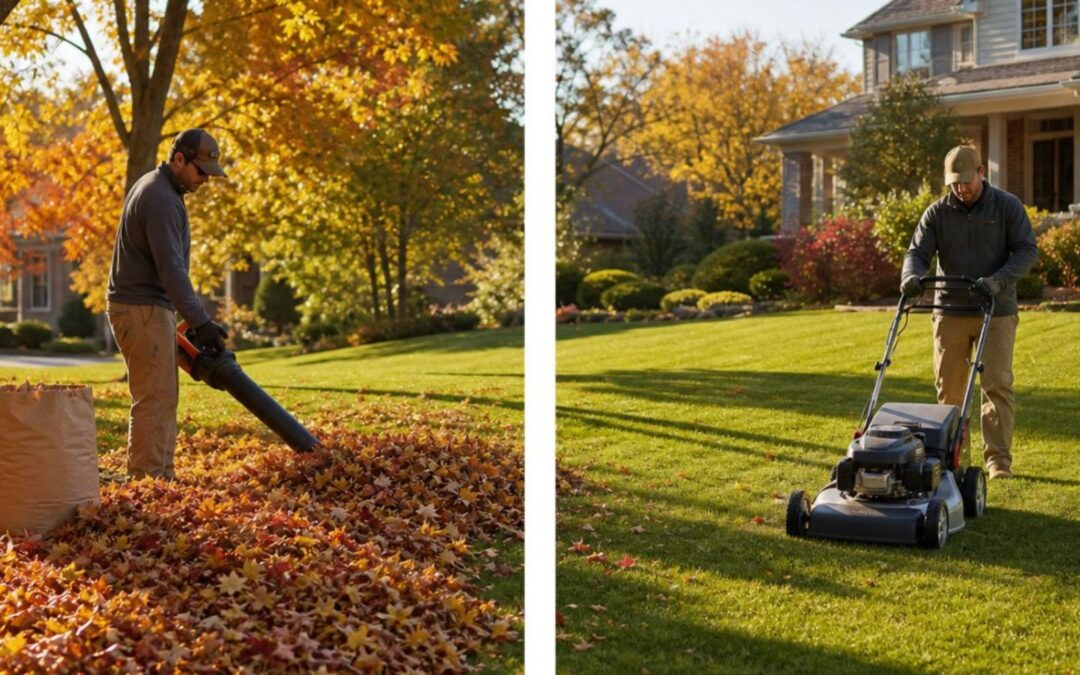
Fall leaf cleanup can look different from one Omaha property to the next. Choosing between leaf removal and mulching depends on the leaves’ condition, how heavily they cover the lawn, and where they have collected.
A few dry leaves scattered across the grass may be easy to manage with a mower. Heavier layers, wet piles, or leaves packed into landscape areas call for a different approach. Knowing when to mulch and when to remove leaves can make seasonal cleanup more effective.
Fall Conditions Shape the Cleanup Approach
The condition and distribution of leaves matter more than simply counting how much has fallen. A thin layer spread across open turf can be handled differently from a deep pile around a tree.
Omaha’s fall weather can also change the cleanup process. Rain can make leaves wet and heavy, while wind can move them into corners, along fences, and around landscape features.
Before choosing a method, consider:
- Leaf condition: Dry leaves break apart more easily than wet or matted material.
- Leaf coverage: A light layer is easier to mulch than a thick, persistent layer.
- Location: Open lawn areas are easier to mow than piles around trees, beds, or structures.
- Equipment: The mower or cleanup equipment needs to handle the amount of material without leaving heavy clumps.
These factors help determine whether mulching, removal, or both are appropriate for the property.
When Mulching Leaves Works Best
Mulching works best when leaves are relatively dry and spread in a manageable layer across the lawn. Mowing breaks them into smaller pieces that can settle into the turf.
A useful indicator is what the lawn looks like after mowing. If grass remains visible and the processed leaves are not forming noticeable piles or clumps, the mower has likely handled the material effectively.
Mulching is generally a good fit when:
- Leaf coverage is light to moderate.
- Leaves are dry enough to break apart.
- Grass remains visible after mowing.
- Most leaves are on open lawn areas.
- The mower can process the material without repeated heavy buildup.
Deep piles and wet, compacted leaves are less suitable for this approach. Trying to repeatedly mow through excessive material can leave debris behind rather than producing an even layer.
When Leaf Removal Makes More Sense
Leaf removal becomes the better option when leaves have accumulated beyond what the lawn and available equipment can reasonably process.
This is common after repeated leaf fall or wet weather. Leaves can become matted together, while piles around trees, fences, planting beds, and walkways may be difficult to manage with a mower.
Removal is generally more appropriate when:
- Leaves form thick or persistent layers.
- Wet conditions have caused them to mat together.
- Large piles have collected in confined areas.
- Leaves have accumulated on walkways or other non-lawn surfaces.
- Heavy coverage remains after mowing
The goal is not necessarily to remove every leaf from the property. Instead, remove excess material from areas where it cannot be effectively processed or where it is likely to remain as a heavy layer.
Leaf Removal vs. Mulching: A Practical Comparison
When comparing leaf removal vs. mulching, neither method is automatically better for every Omaha lawn. The right choice depends on the condition of the leaves and the area being cleaned.
| Lawn Condition | Mulching | Leaf Removal |
|---|---|---|
| Light layer of dry leaves | Often practical | Usually unnecessary |
| Moderate, evenly spread leaves | May work well | May be appropriate |
| Thick leaf coverage | Less practical | Better choice |
| Wet or matted leaves | Difficult | Usually more effective |
| Leaves around landscape beds | Limited usefulness | More practical |
| Large piles around trees or fences | Not ideal | Better choice |
The same property may need both approaches. A mower may handle scattered leaves across an open lawn, while a heavy accumulation around a tree or along a fence is better removed.
A Combination Approach Often Works Best
Homeowners do not have to use one method for the entire fall season. Combining the two can be more practical when leaf conditions vary across the property.
A simple approach is to:
- Mulch manageable leaves: Process light to moderate coverage across open lawn areas when the leaves are dry, and the grass remains visible.
- Remove heavy accumulations: Clear thick piles around trees, planting beds, sidewalks, fences, and other areas that are difficult to mow.
- Check the lawn between cleanups: Watch for areas where leaves are beginning to form a persistent layer rather than waiting until the entire property is covered.
- Adjust as conditions change: If rain or additional leaf fall makes the existing layer too heavy to process, remove the excess instead of continuing to mow through it.
This approach also helps prevent a small cleanup task from becoming a larger one later in the season. Addressing heavy buildup as it develops is generally more manageable than waiting until several layers have accumulated.
For an Omaha lawn, leaf removal vs. mulching is not an either-or decision for every property. Mulching is often the better fit for manageable dry leaves on open turf, while removal is more appropriate for heavy, wet, or concentrated accumulations.
Frequently Asked Questions
Does mulching replace all fall leaf cleanup?
Not necessarily. Mulching can handle manageable leaf coverage on the lawn, but heavier accumulations and leaves collected in other areas may still need to be removed.
Can wet leaves be mulched?
Wet leaves are harder to process because they tend to clump rather than break apart evenly. When they have become heavily matted, removal is usually the more practical option.
Should leaves be removed before mowing?
Not always. A light, dry layer can often be processed directly with a mower, while deep piles are better cleared first.
How often should leaves be cleared during fall?
There is no fixed schedule for every property. Cleanup frequency depends on how quickly leaves accumulate, weather conditions, the number of trees nearby, and how well the lawn is handling the existing layer.
Does the type of mower affect leaf cleanup?
Yes. Equipment capacity affects how much material can be processed effectively. A mower that handles a light layer well may struggle with deep or wet accumulations, making removal a better option in those areas.
Vista Verde Landscaping | Professional Landscape Maintenance in Omaha, NE
At Vista Verde Landscaping, we understand that the details matter. Our team provides professional mulching, edging, and seasonal clean-up services designed to keep your property looking clean, healthy, and well-maintained throughout the summer.
From refreshing garden beds to maintaining clean lines and removing debris, we help homeowners create outdoor spaces that stand out.
Contact Vista Verde Landscaping today to schedule your summer landscape maintenance services.